Cost averaging: buying a little, often


Buying a fixed amount on a fixed day takes the guesswork out of timing. How it works, when it helps and when it doesn't.
Key takeaways
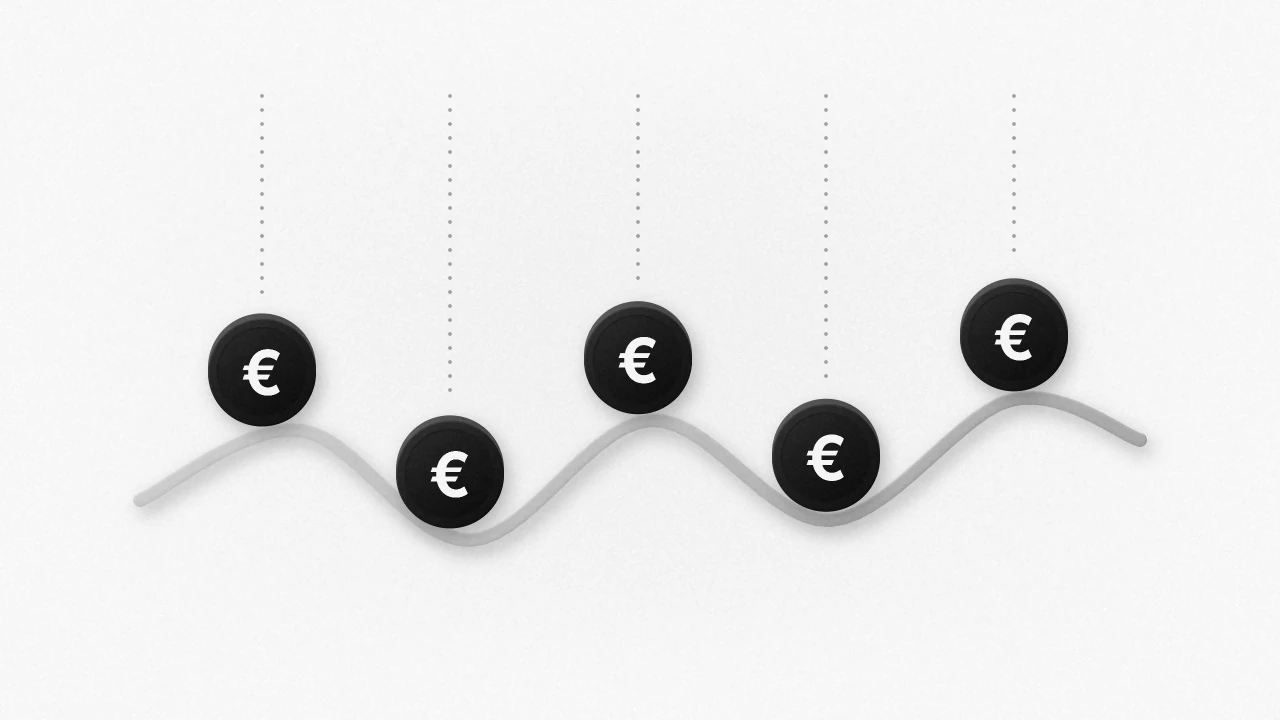
- A fixed amount buys more units when prices are low and fewer when they are high.
- It removes the pressure of picking the right moment.
- It doesn't protect you from a market that keeps falling.
How it works#
Instead of investing €600 today, you invest €100 on the first of each month for six months. You stop asking whether today is a good day to buy, because you buy on all kinds of days.
| Month | Price | €100 buys |
|---|---|---|
| 1 | €50.00 | 2.00 units |
| 2 | €40.00 | 2.50 units |
| 3 | €25.00 | 4.00 units |
| 4 | €40.00 | 2.50 units |
| 5 | €50.00 | 2.00 units |
| 6 | €62.50 | 1.60 units |
Six buys bring 14.6 units at an average cost of about €41, although the average price over those months was nearly €45. The cheap months did the work: the same €100 simply bought more.
Why it helps#
- No single bad moment decides your result.
- It turns investing into a habit that survives busy months.
- Falling prices become less frightening: your next buy is cheaper.
Where it falls short#
Markets rise more often than they fall, so money invested all at once has, on average, done a little better than the same money fed in bit by bit. Cost averaging gives up some of that in exchange for a smoother ride. And it is no shield: if an asset falls for years, regular buying only lowers the average price of something that is still worth less.
Pick the day after your salary arrives, and let a recurring buy place the orders for you.