Compound growth: how returns earn returns


Leave gains invested and they start earning gains of their own. Why time matters more than the amount you start with.
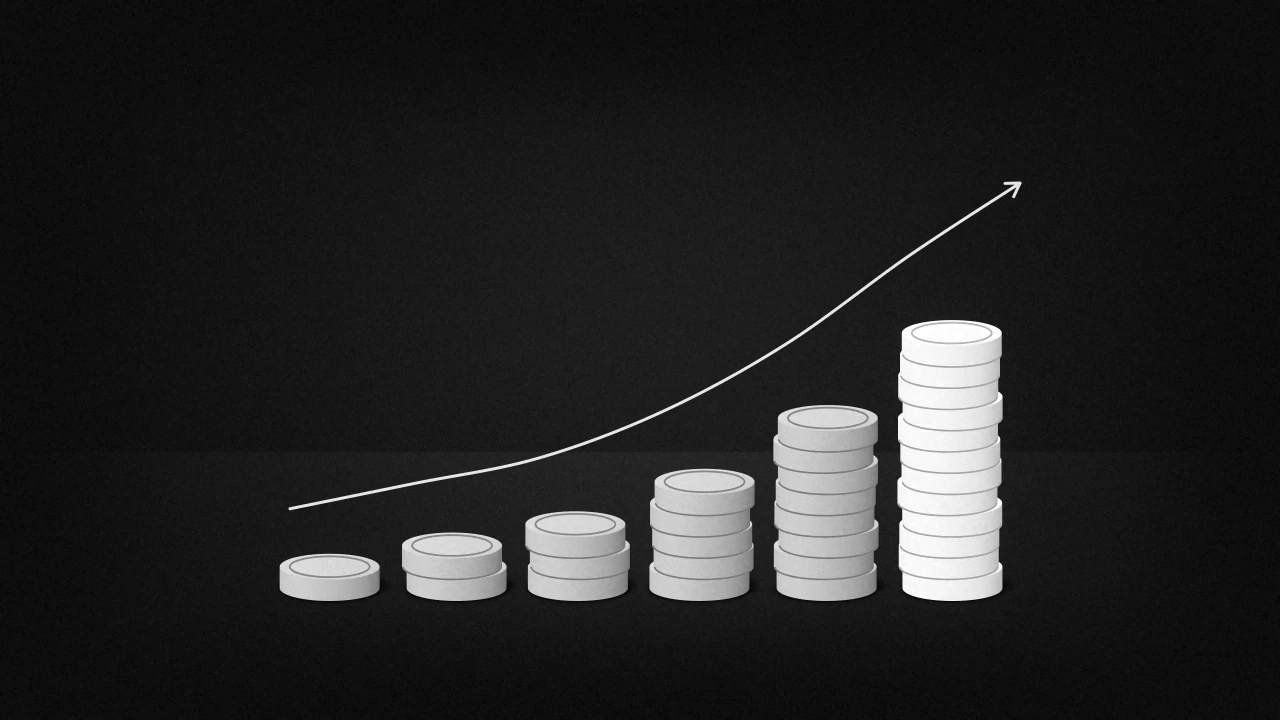
Key takeaways
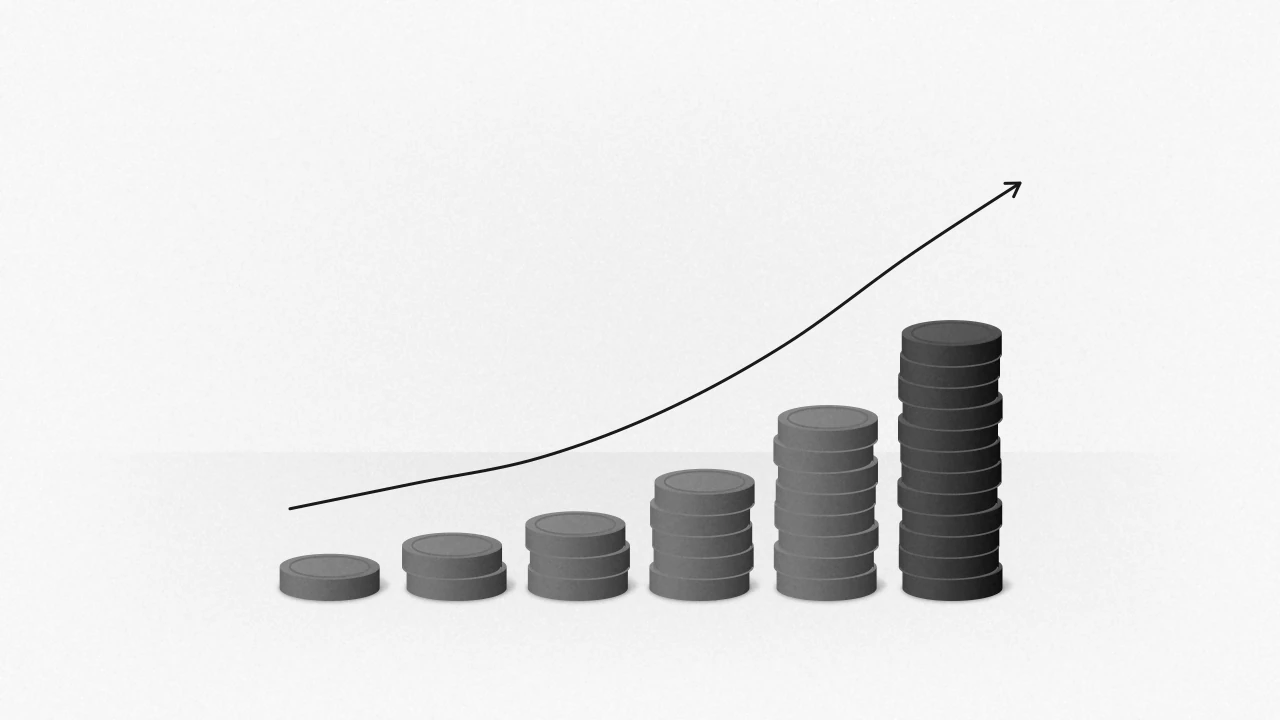
- Compounding is growth on growth: each year builds on a larger base.
- At 7 % a year, money doubles in about ten years.
- Starting ten years earlier can beat investing twice as much later.
Growth on growth#
Invest €1,000 at 7 % and after a year you have €1,070. In the second year the 7 % is earned on €1,070, not on €1,000. The difference is small at first and enormous later, because every year's gain becomes part of the base for the next.
| After | €1,000 at 7 % a year |
|---|---|
| 10 years | €1,967 |
| 20 years | €3,870 |
| 30 years | €7,612 |
| 40 years | €14,974 |
The rule of 72#
Divide 72 by the yearly return and you get roughly how many years doubling takes. At 7 % that is about ten years; at 4 %, eighteen; at 10 %, a little over seven.
Time beats amount#
Someone who puts in €100 a month for thirty years at 7 % ends with about €122,000. Someone who waits ten years and then puts in €200 a month for twenty years ends with about €104,000, having paid in more. The early years are the ones that compound longest.
What breaks compounding#
- Selling in a panic and missing the recovery.
- Costs: 1 % a year less return leaves about a quarter less money after thirty years.
- Taking the gains out instead of leaving them invested.
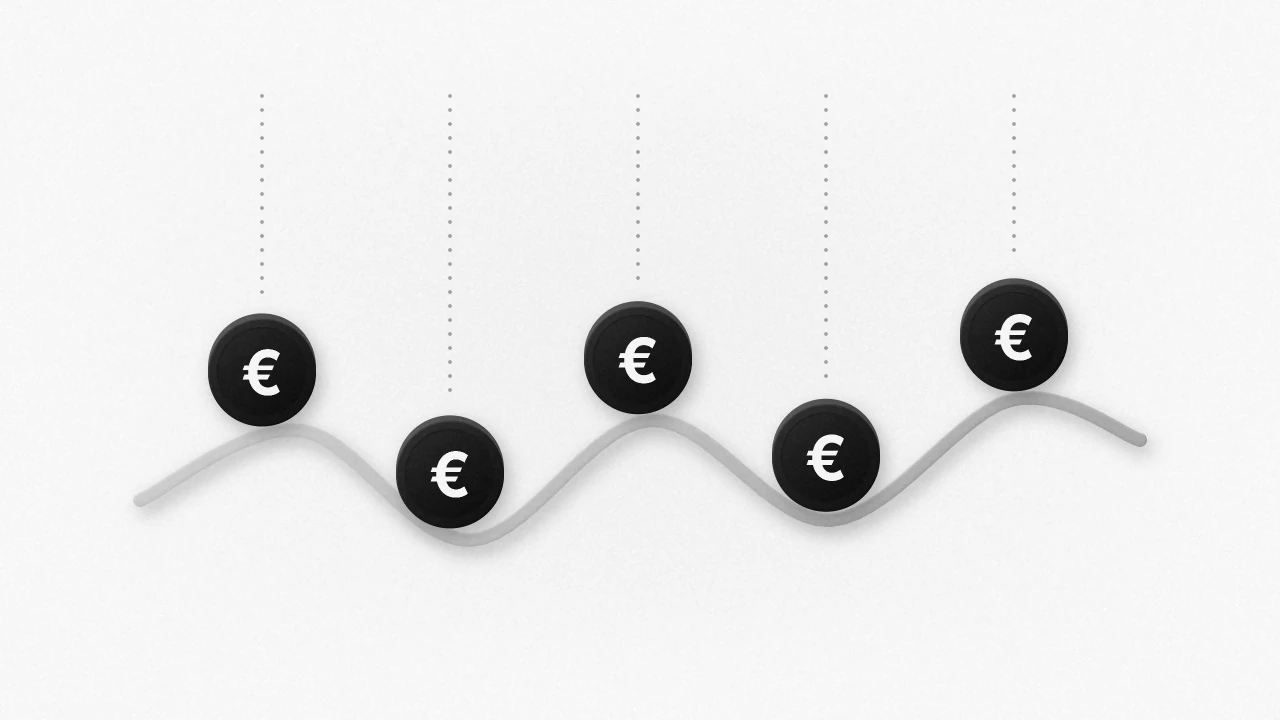
No market returns the same figure every year. The 7 % here is an illustration, not a promise: real returns arrive in good years and bad.