What are altcoins?
Reirex LearnPublished Oct 29, 20262 min read


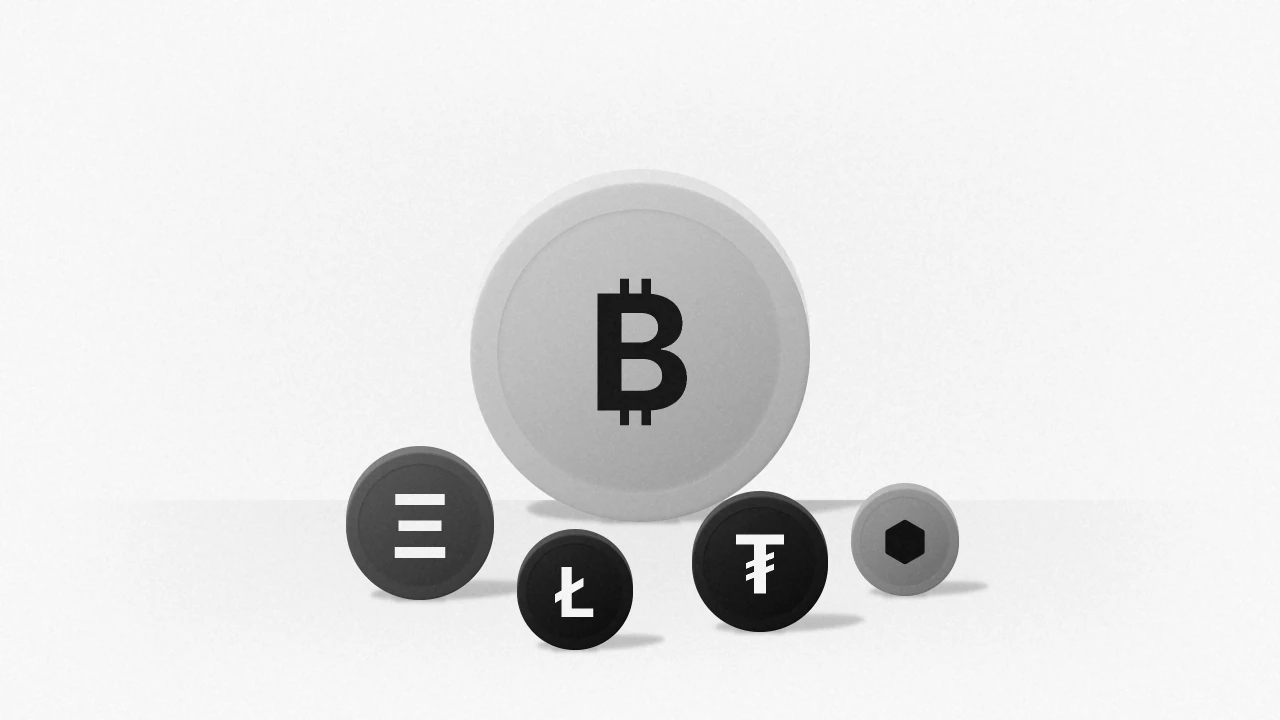
Every cryptocurrency that isn't Bitcoin is an altcoin. There are thousands; a handful matter. How to tell them apart.
Key takeaways
- Altcoin simply means any coin other than Bitcoin.
- Most fall into a few groups: platforms, payment coins, stablecoins, exchange tokens and meme coins.
- Smaller coins rise faster and fall harder, and many disappear.
Alternatives to Bitcoin#
Bitcoin was built to be money. The coins that followed tried other things: running programs, moving faster, costing less, or simply riding a joke. Together they are called altcoins.
The main groups#
| Group | What it is | Examples |
|---|---|---|
| Smart-contract platforms | Networks that run applications | Ethereum, Solana, Cardano |
| Payment coins | Built for fast, cheap transfers | XRP, Litecoin, Stellar |
| Stablecoins | Pegged to a currency | USDT, USDC |
| Exchange tokens | Issued by trading platforms | BNB, OKB |
| Meme coins | Driven by community and attention | Dogecoin, Shiba Inu |
How to judge one#
- What does it do, and does anyone use it for that?
- How large is it? A small market value means big moves on little money.
- How are the coins shared out? A few large holders can move the price alone.
- Where does it trade? Thin trading makes it costly to get in and out.
The risks#
Altcoins tend to move with Bitcoin, only more so: when Bitcoin falls 20 %, many fall 40 %. Of the coins that led the market ten years ago, most have faded. Treat a small coin as a stake you could lose entirely, and size it that way.
A rising price and a busy chat group say nothing about a coin's worth. Many projects fail, and some are built to.